

About Tripline
An insurance site that shows the payout happen: the data crosses the strike, the policy pays.
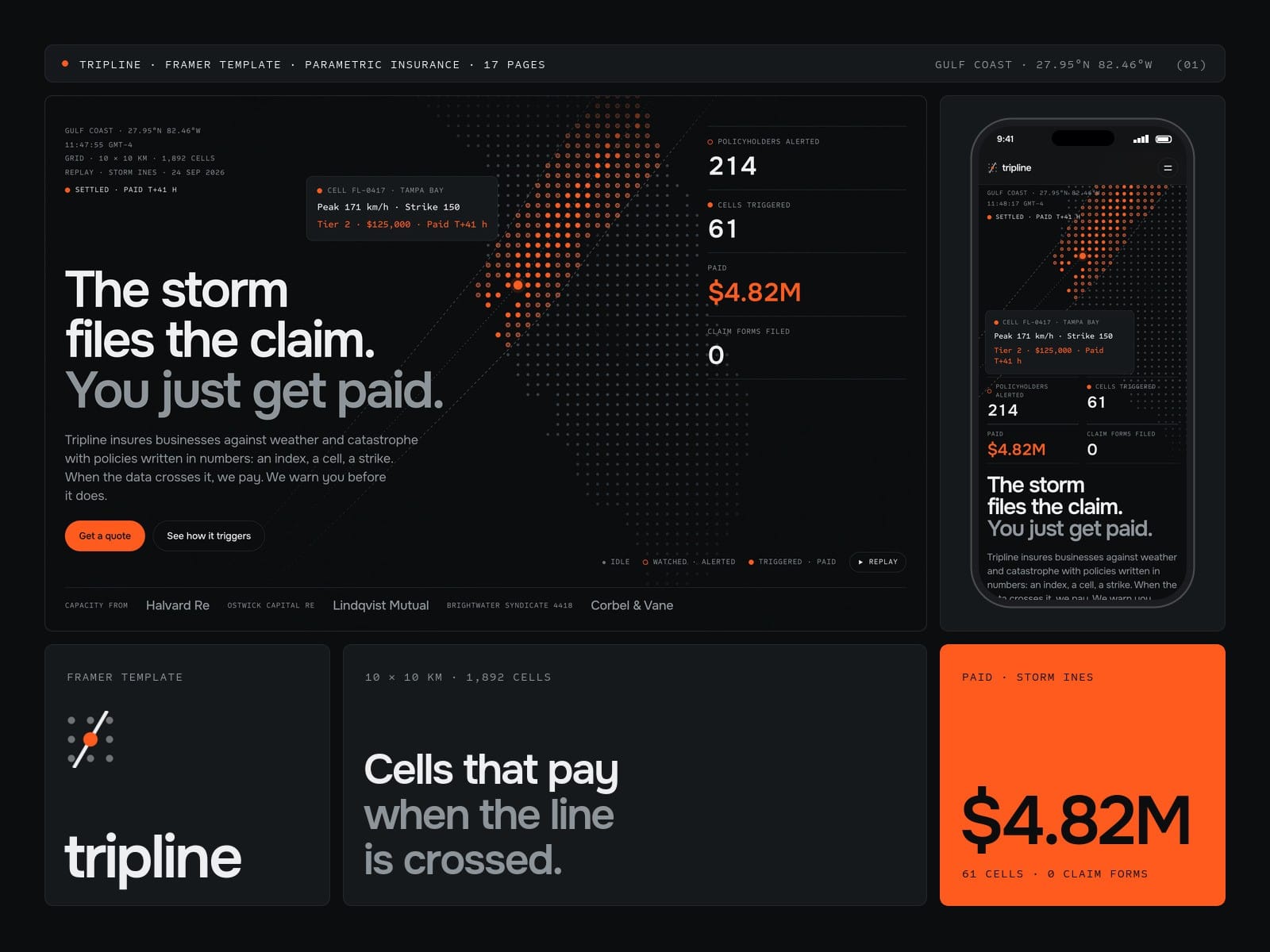
Most insurance templates are a smiling family, a shield and a quote button. Tripline is built around how parametric cover works: a grid of 10 × 10 km cells, a storm that crosses them, and a payment that leaves when the reading passes the strike.
Why most insurance sites don't convince
The product is a stock photo. Tripline's hero is a live cell map: a storm crosses the coast, cells turn from watched to triggered and the paid total counts up.
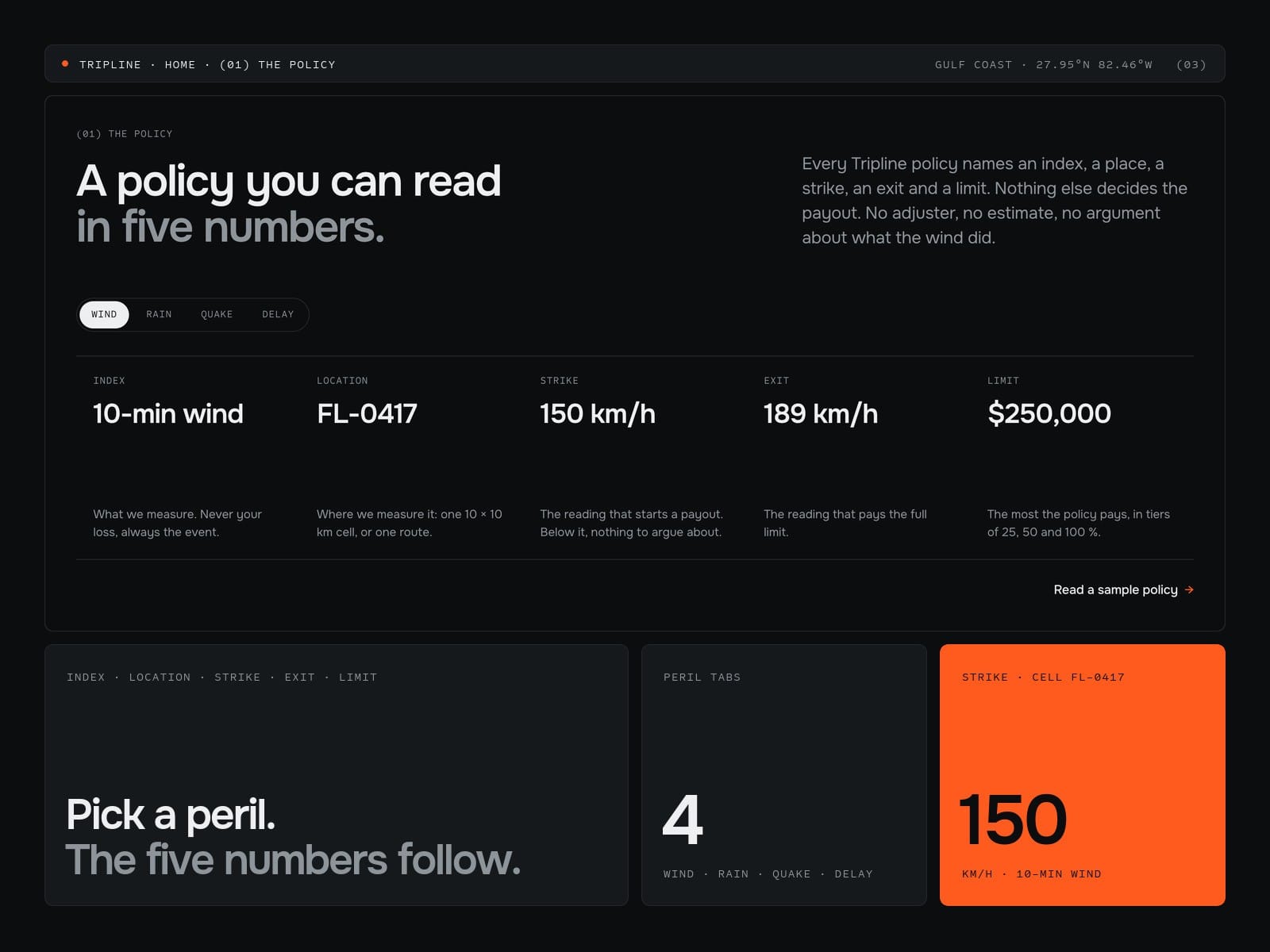
The policy is a PDF. Here it is five numbers on the Home page (index, location, strike, exit, limit), with tabs for wind, rain, quake and flight delay.
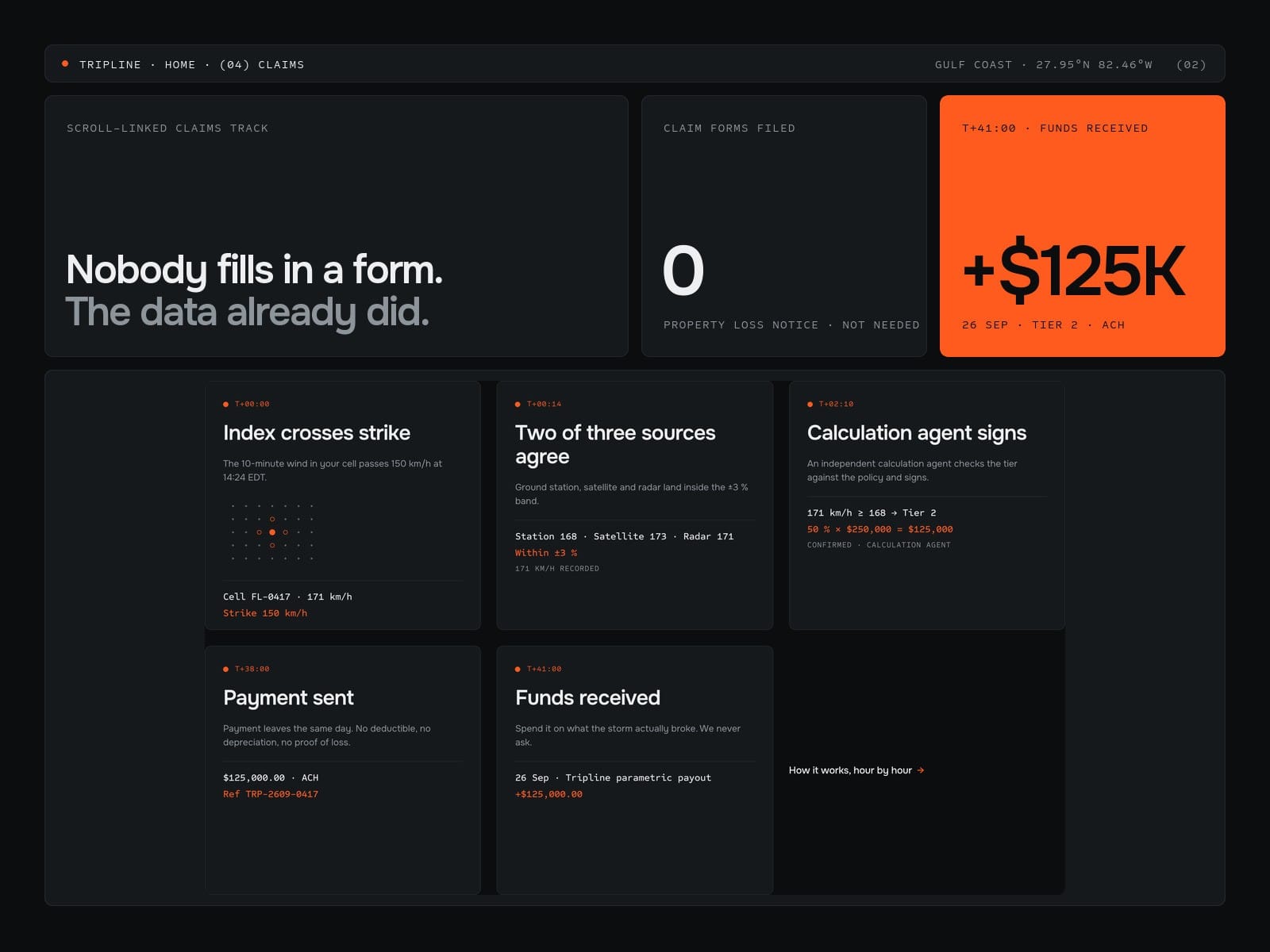
Claims are a promise. Five timestamped cards run from the strike crossed (T+00:00) to the funds received (T+41:00).
Coverages are a list. Six perils live in the CMS, each with its own page: index, typical strike, limits, data sources and who buys it.
Try it in the preview
On the Home page, pick a storm and watch its reading climb the tier ladder to a payout. Then open Data and click "What if one disagrees?".
What you get
17 pages, including a CMS page per coverage, article and legal document
7 CMS collections, 55 entries: coverages, data sources, FAQ, journal, team, capacity partners, legal pages
20+ components with fields in the right panel
Cell Map: one code component, storm track, strike, tiers and labels set in the right panel
5 interactive sections: peril tabs, storm ladder, source check, prevention timeline, premium split
Legal pages and a sample policy in the CMS
Start Here page (12 illustrated steps) + 9 guides
3 Agent Skills (/design-system, /cms-content, /pre-publish-check) and a prompt pack
Design System page · Reduced-motion support
Perfect for
Parametric insurers, MGAs, climate-risk and catastrophe cover, insurtech startups and the brokers who sell them.