AI HAS STARTED A LAYOFF RACE.
Okay. I’ve been quiet about the AI madness for a while.
Watching.
Listening.
Trying to separate the loudest opinions from what is actually happening.
I’m ready to talk about it.
This is the first post in a series.
No hype.
No “AI will save us.”
No “AI will destroy humanity.”
Just a closer look at the incentives already shaping the market.
A paper by two economists argues that AI can trigger a layoff race.
Here’s the nightmare in plain English:
One company replaces people with AI.
Costs go down.
Investors clap.
Competitors panic.
Nobody wants to be the last business paying a “bloated” payroll while everyone else cuts costs.
So they do it too.
Then the people who lost their jobs have less money to spend.
They buy less.
Demand falls.
Sales drop — not only for the company that fired them, but for everyone.
And what do businesses do when demand drops?
They cut more people.
Every company can say: “We had to. Everyone else was doing it.”
Individually, that decision may be rational.
Collectively, it is a disaster.
Cheaper products sound great — until fewer people can afford to buy them.
That is the trap.
The authors call it a prisoner’s dilemma. Firms capture the savings from automation, while the damage to demand gets spread across the whole market.
Their solution? A tax on automation that replaces workers — not to punish useful AI, but to stop companies from outsourcing the cost of layoffs to everyone else.
Sounds dramatic?
Maybe.
But the next question is more important:
Is this actually what is happening right now?
In the next posts, we’ll look at the market without the AI fever: jobs, money, data, energy — and the parts nobody puts in the pitch deck.
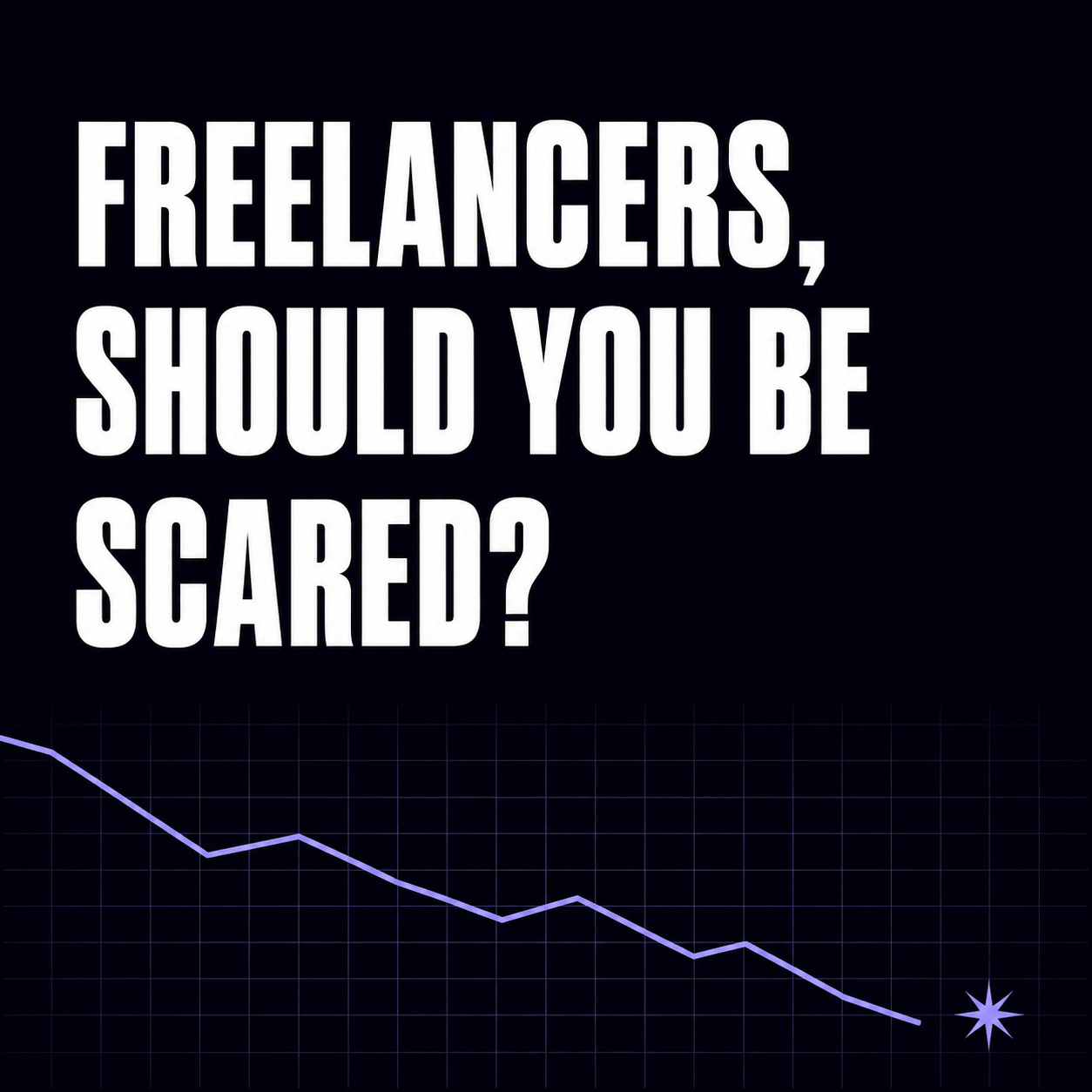
So, freelancers: scared yet?
Sources for this post:
https://arxiv.org/abs/2603.20617
Transparency note:
Written by a human.
Translated from Russian to English with GPT.
GPT’s output, facts, and sources were reviewed by a human.

AI HAS STARTED A LAYOFF RACE.
Okay. I’ve been quiet about the AI madness for a while.
Watching.
Listening.
Trying to separate the loudest opinions from what is actually happening.
I’m ready to talk about it.
This is the first post in a series.
No hype.
No “AI will save us.”
No “AI will destroy humanity.”
Just a closer look at the incentives already shaping the market.
A paper by two economists argues that AI can trigger a layoff race.
Here’s the nightmare in plain English:
One company replaces people with AI.
Costs go down.
Investors clap.
Competitors panic.
Nobody wants to be the last business paying a “bloated” payroll while everyone else cuts costs.
So they do it too.
Then the people who lost their jobs have less money to spend.
They buy less.
Demand falls.
Sales drop — not only for the company that fired them, but for everyone.
And what do businesses do when demand drops?
They cut more people.
Every company can say: “We had to. Everyone else was doing it.”
Individually, that decision may be rational.
Collectively, it is a disaster.
Cheaper products sound great — until fewer people can afford to buy them.
That is the trap.
The authors call it a prisoner’s dilemma. Firms capture the savings from automation, while the damage to demand gets spread across the whole market.
Their solution? A tax on automation that replaces workers — not to punish useful AI, but to stop companies from outsourcing the cost of layoffs to everyone else.
Sounds dramatic?
Maybe.
But the next question is more important:
Is this actually what is happening right now?
In the next posts, we’ll look at the market without the AI fever: jobs, money, data, energy — and the parts nobody puts in the pitch deck.
So, freelancers: scared yet?
Sources for this post:
https://arxiv.org/abs/2603.20617
Transparency note:
Written by a human.
Translated from Russian to English with GPT.
GPT’s output, facts, and sources were reviewed by a human.