About Kineta Hardware
KINETA is built for teams launching something you can hold: batteries, robots, sensors, energy or medical devices.
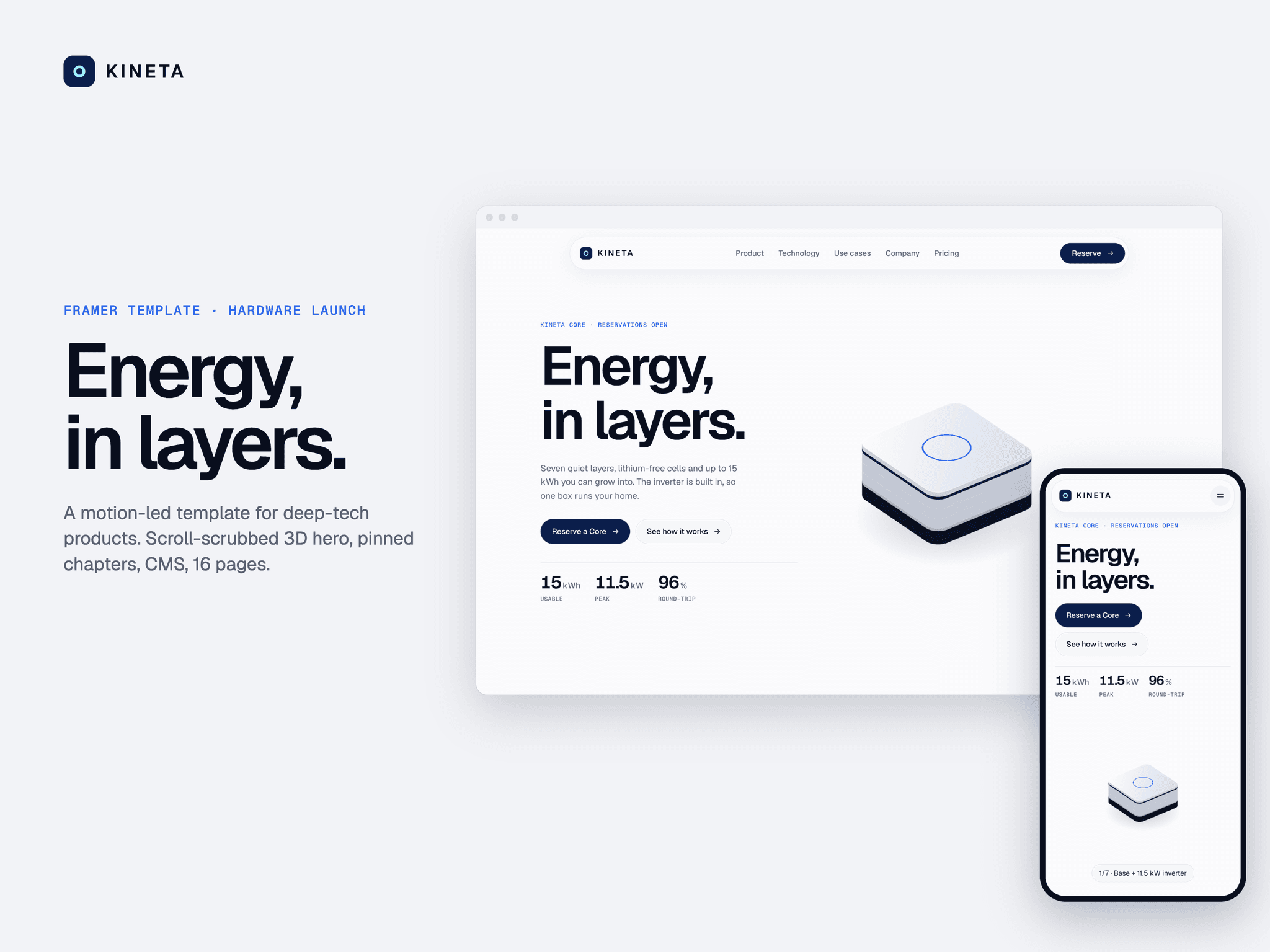
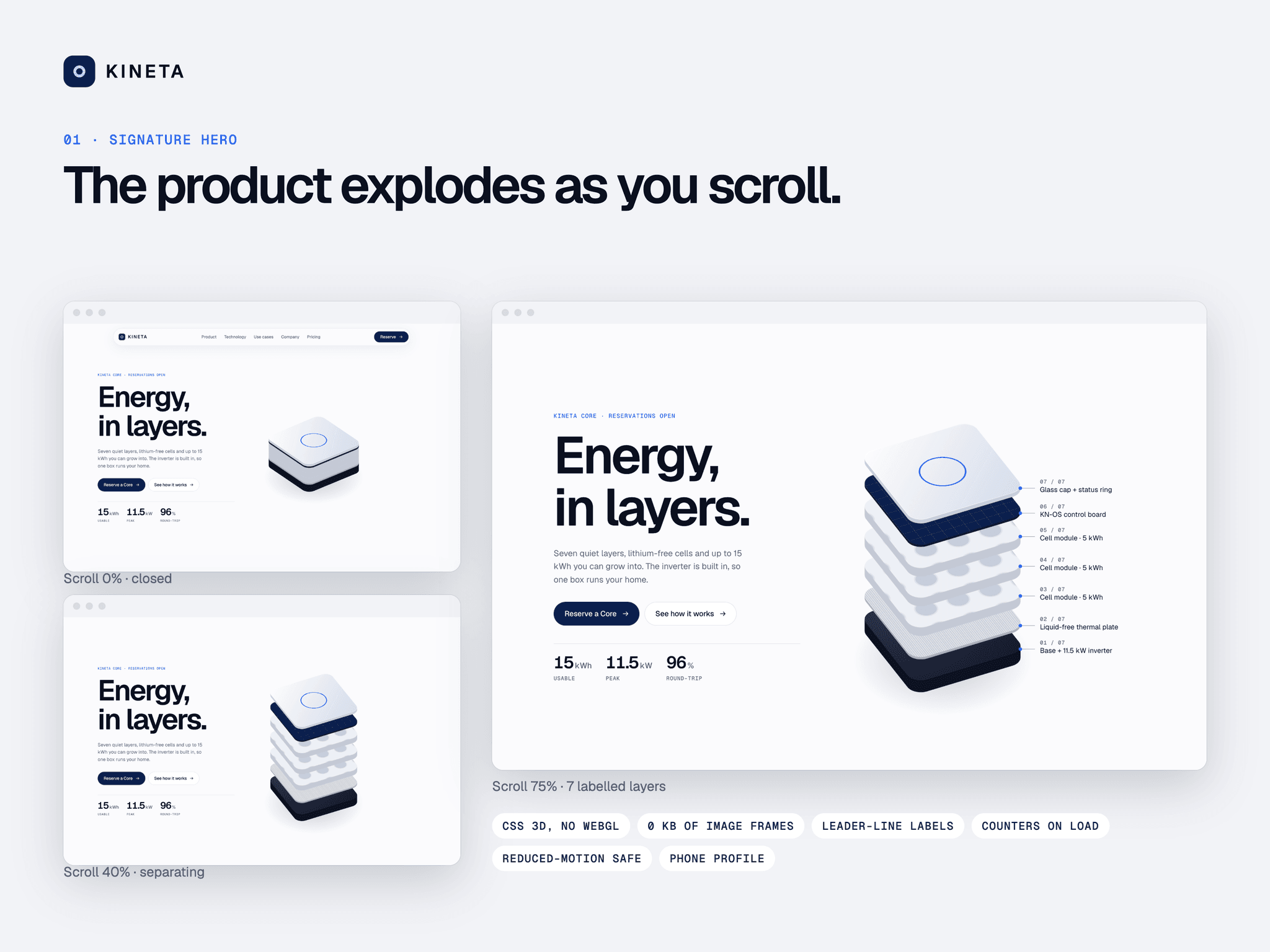
- The hero is the product itself. A CSS 3D model separates into seven labelled layers as you scroll.
- Pinned chapters, a dark chapter and a sideways gallery carry the story from "what it is" to "where it works".
- Lightweight motion. One set of easing and timing tokens, transform and opacity only, about 15 KB of custom code. It respects reduced motion and has its own calmer phone profile.
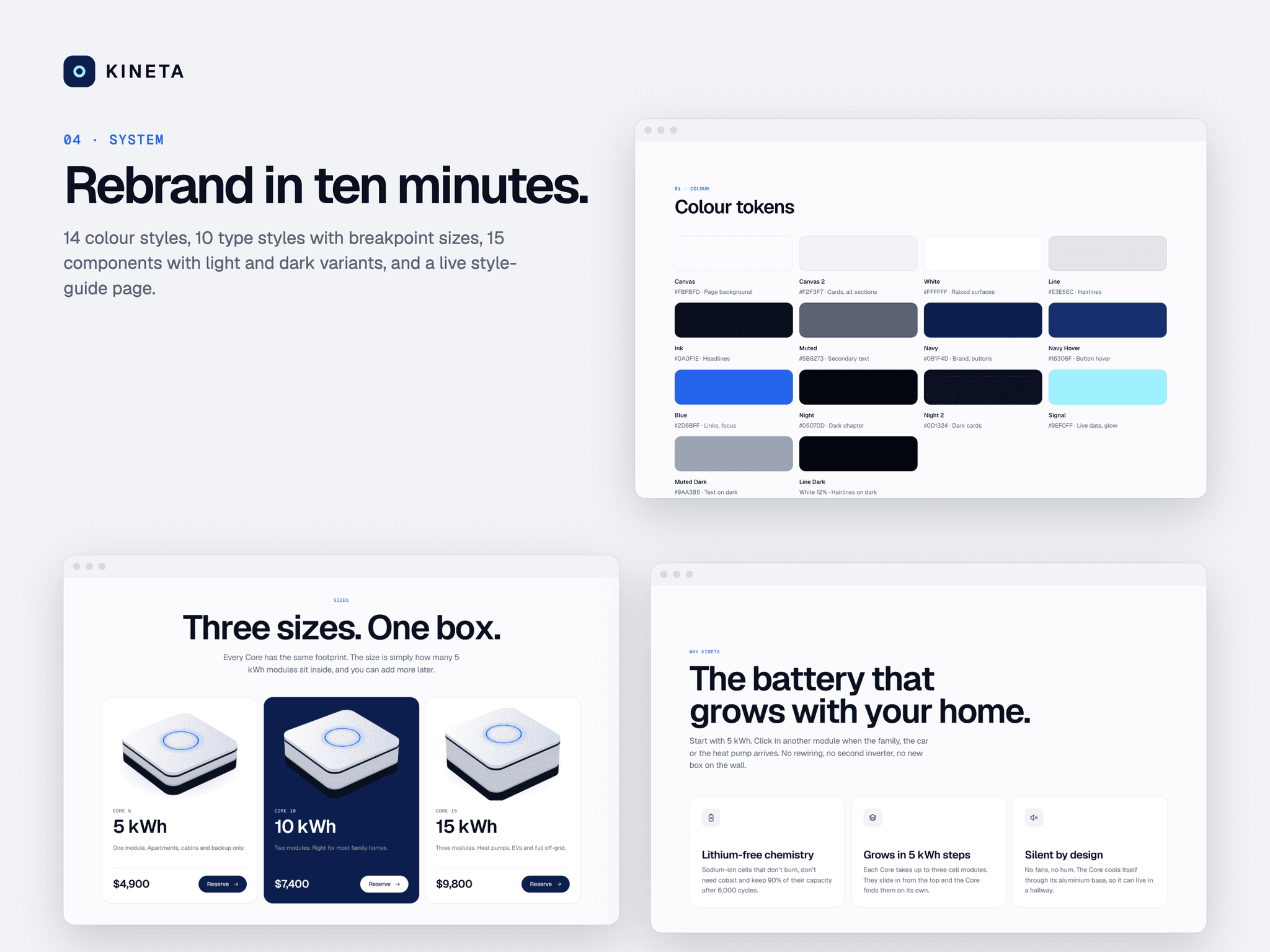
- Quick to rebrand. 14 colour styles, 10 responsive type styles and 15 components with light and dark variants. There's a live style guide (/system) and a step-by-step guide (/guide), including how to swap the 3D product.
## Features
- Scroll-scrubbed CSS 3D exploded hero, with no WebGL and no image sequences.
- Pinned "How it works" steps driven by scroll.
- Light → dark → light page story with gradient bridges.
- Horizontal scroll gallery fed by the CMS; it becomes a swipe row on phones.
- Counting stats, line-reveal titles, magnetic buttons, and a nav that hides on scroll.
- Smooth scroll that keeps native scrolling, so sticky elements and scroll effects stay in sync.
- 3 CMS collections: Use Cases (8), Journal (6), Jobs (5), each with its own detail page.
- Forms: newsletter signup and a contact form with sending, done and error states.
- SEO: page titles and descriptions, a social image and favicons.
- Lighthouse on kineta.framer.ai (mobile, median of 3 runs): accessibility, best practices and SEO all 100; performance 89–99 on text-led pages, 71–82 on image-led pages.
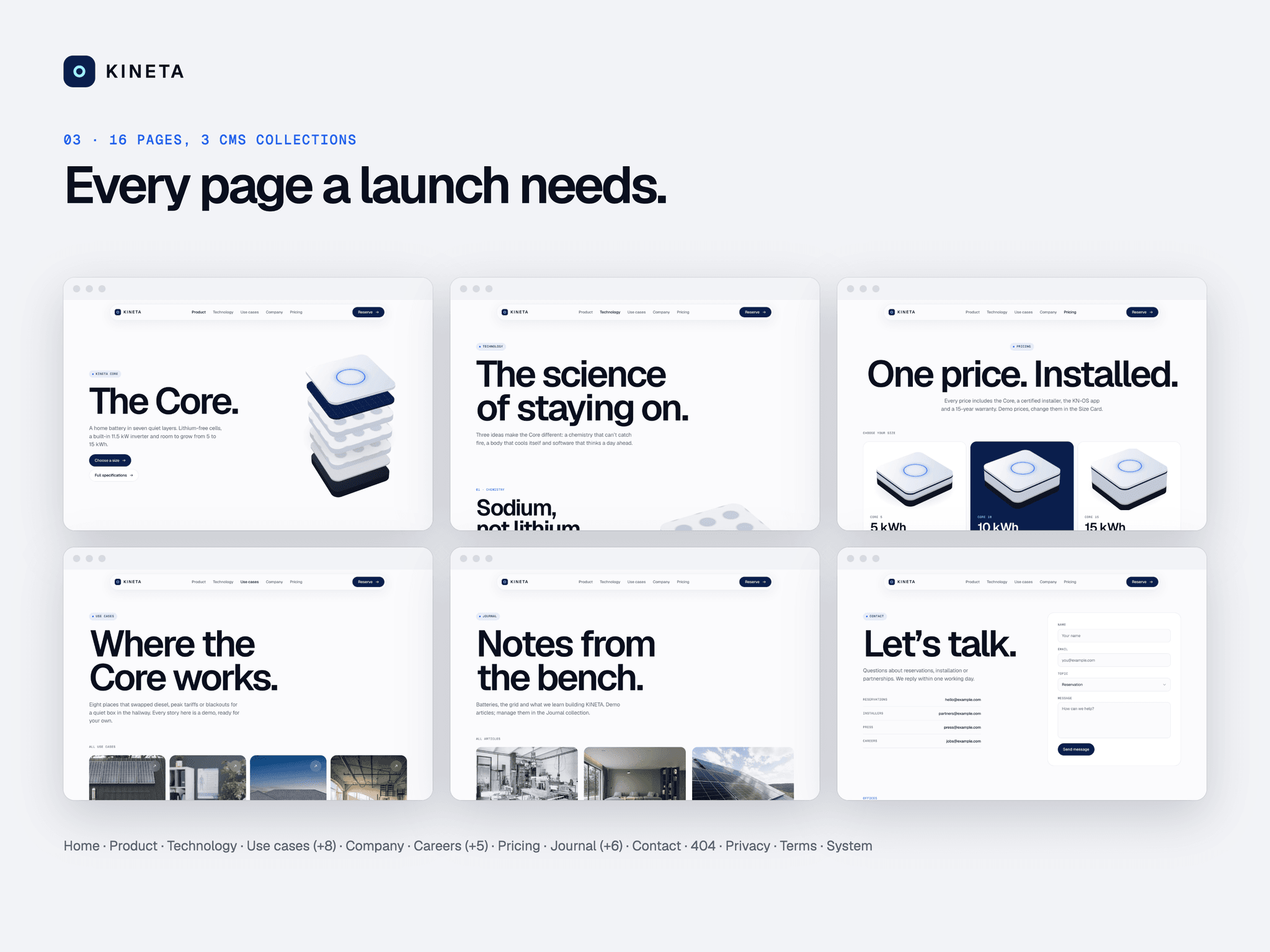
## Pages (16)
Home · Product · Technology · Use cases (+ detail) · Company · Careers (+ job detail) · Pricing · Journal (+ article) · Contact · 404 · Privacy · Terms · System (style guide) · Guide