About Sluice
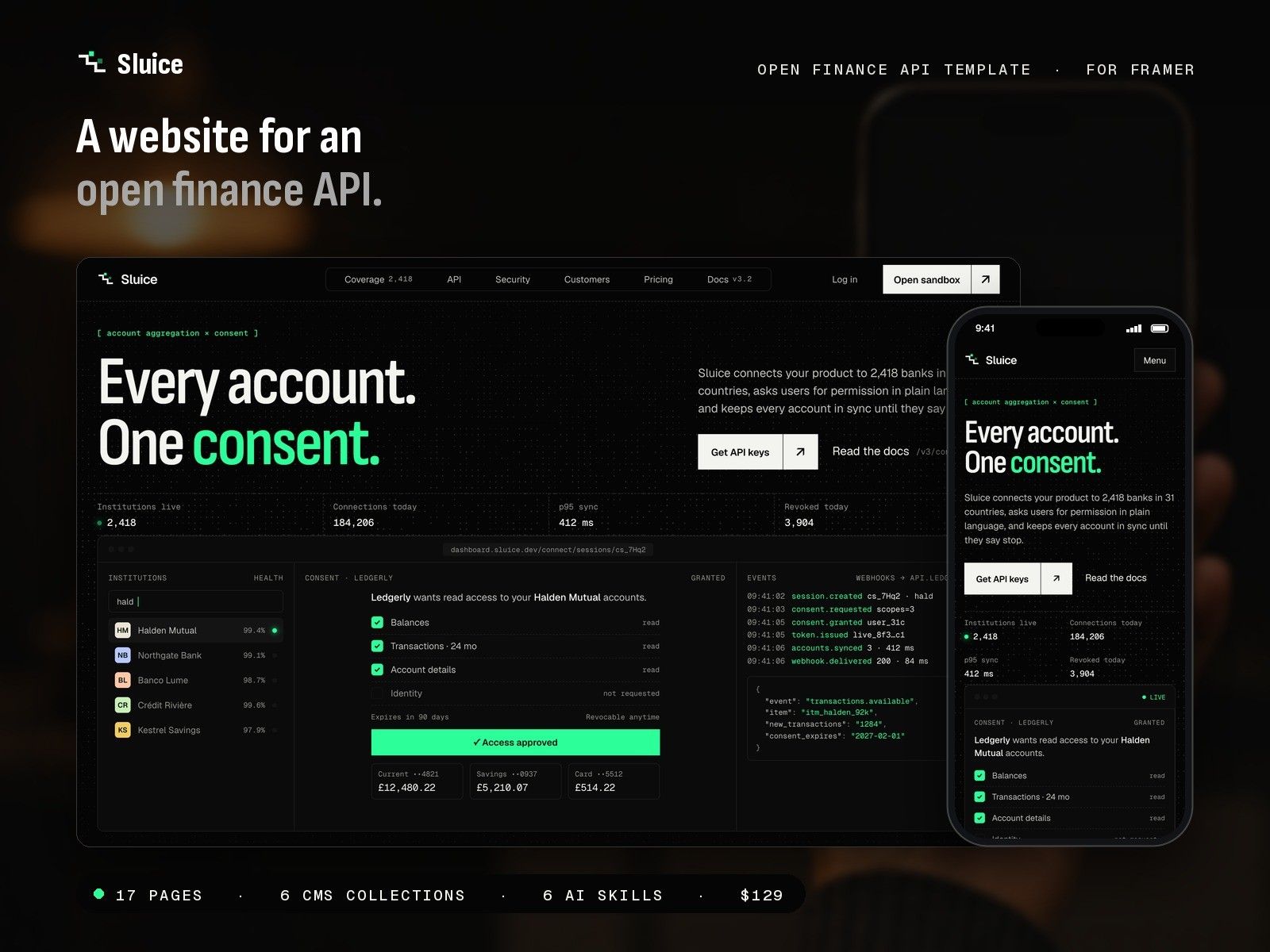
A website for an open finance API, built around the consent moment.
Most fintech API sites open on a gradient and a promise. Sluice opens on a live console: a user picks a bank, approves access, and the accounts and webhooks arrive.
Why most open finance API sites don't convert
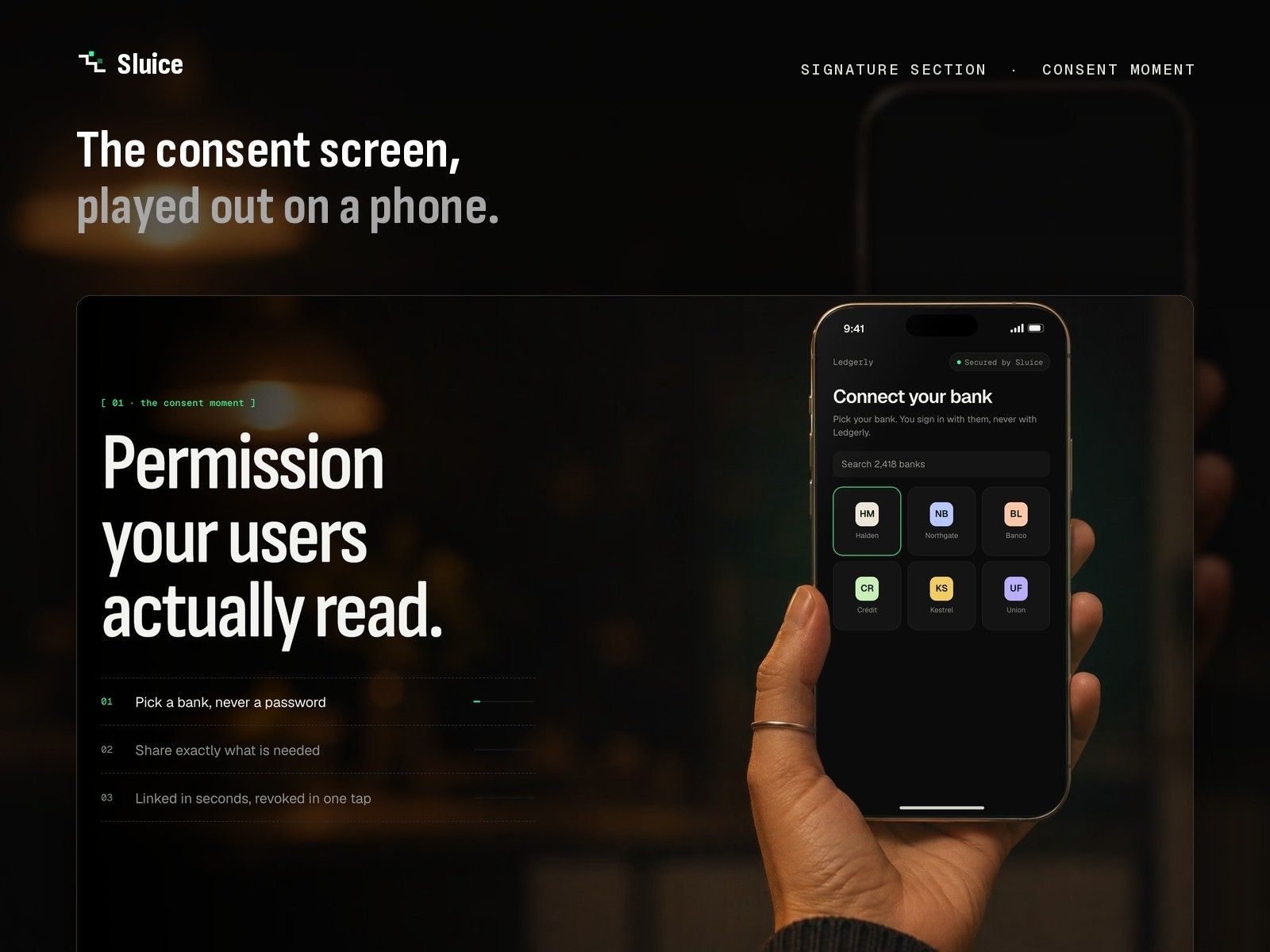
Consent is a checkbox. The consent moment plays out on a phone: pick a bank, share exactly what is needed, linked in seconds.
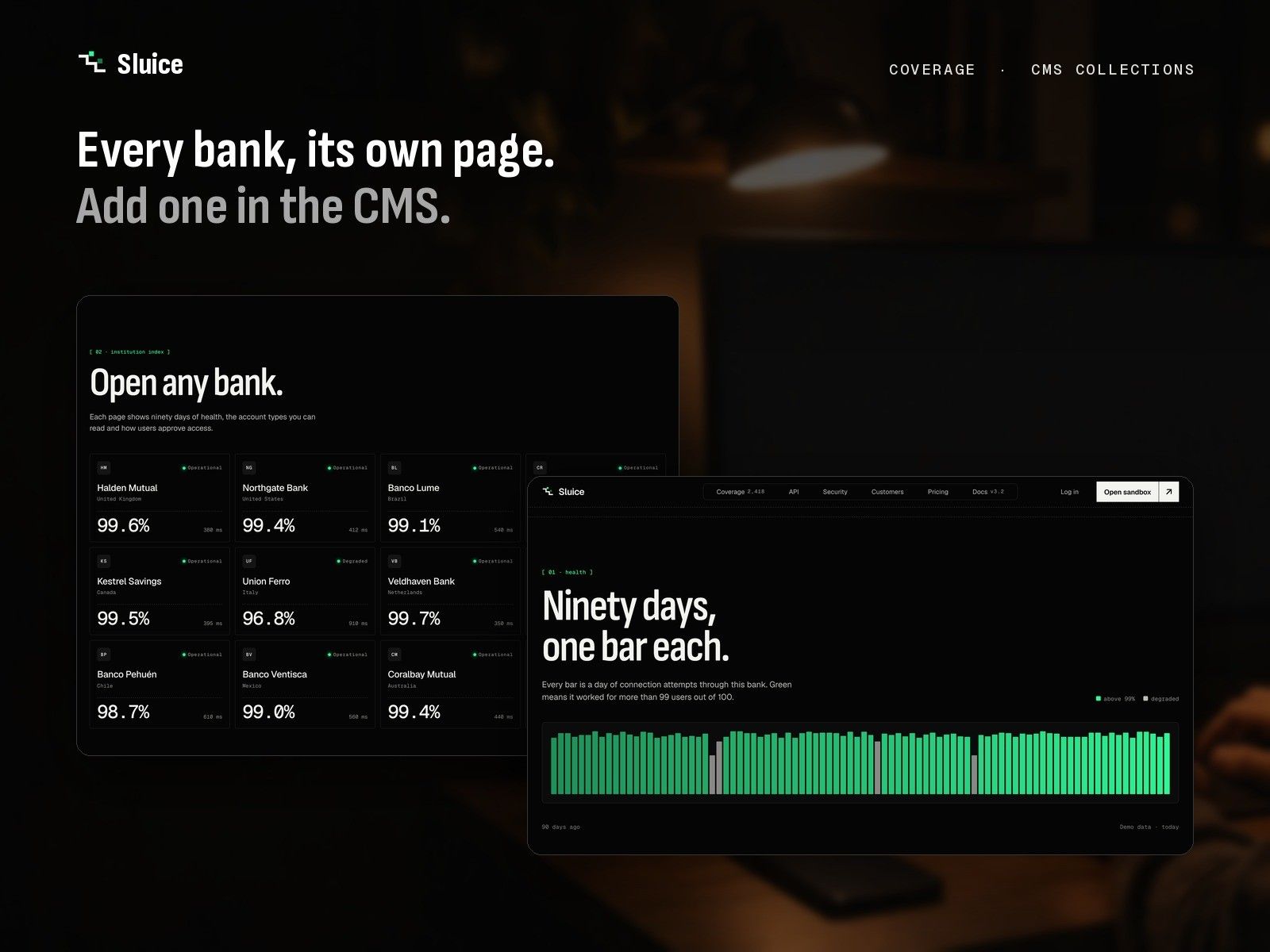
Coverage is a number. Every bank has its own CMS page: ninety days of health, the data you can read, how users approve access.
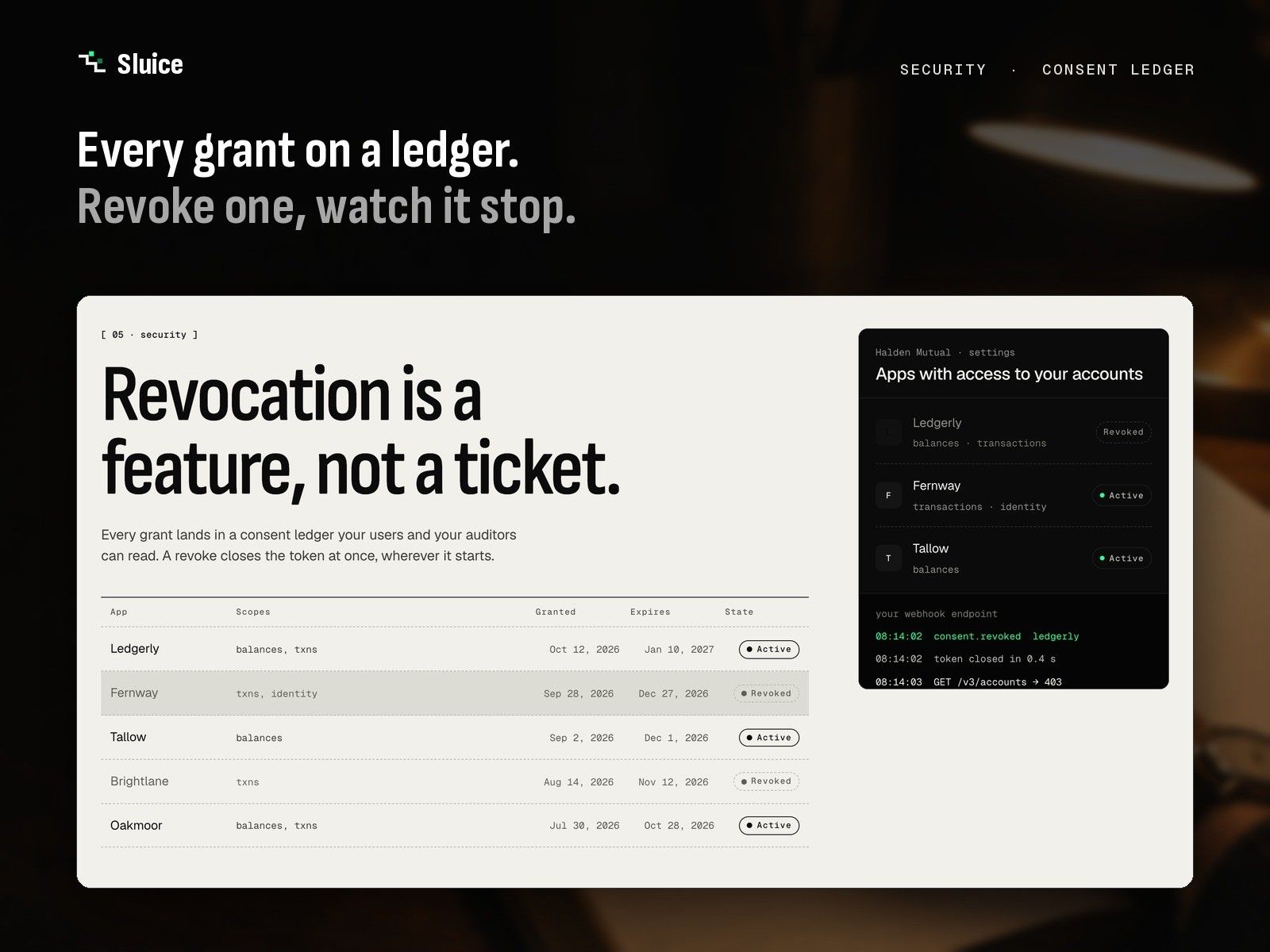
Security is a wall of badges. Every grant sits on a consent ledger, and the data path is shown in four stops.
The API looks harder than it is. Twelve endpoints, signed webhooks, two SDKs, code in Node, Python and cURL.
Try it in the preview
Open Coverage and click any bank: ninety days of health, one bar per day, then the data you can read.
What you get
17 pages, including a page per bank, customer story, guide, release and legal document
6 CMS collections, filled: Institutions, Customers, Docs, Changelog, FAQ, Legal
41 components and 3 code components: Sluice Console, Consent Phone, Dot Field
A Reduced Motion control on each code component
Buttons are plain links: paste your sign-up or dashboard URL
A contact form shipped with Send To empty
A Start Here page in 13 steps with editor screenshots, and a Design System page
6 Agent Skills, from /personalize to /pre-publish-check
License, updates, refunds
One purchase covers one website. When we publish an update, remix again from the link in your purchase email. No refunds once the remix link has been sent, unless the template has a technical problem we cannot fix. Sluice, its banks, customers and figures are fictional.
Changelog
1.0 — November 2026 — Initial release.
Perfect for
Open banking and account aggregation APIs, and any API or infrastructure product with integrations, docs and a changelog.