About Deepfake AI
DEEPFAIC - AI Communication & Media Security
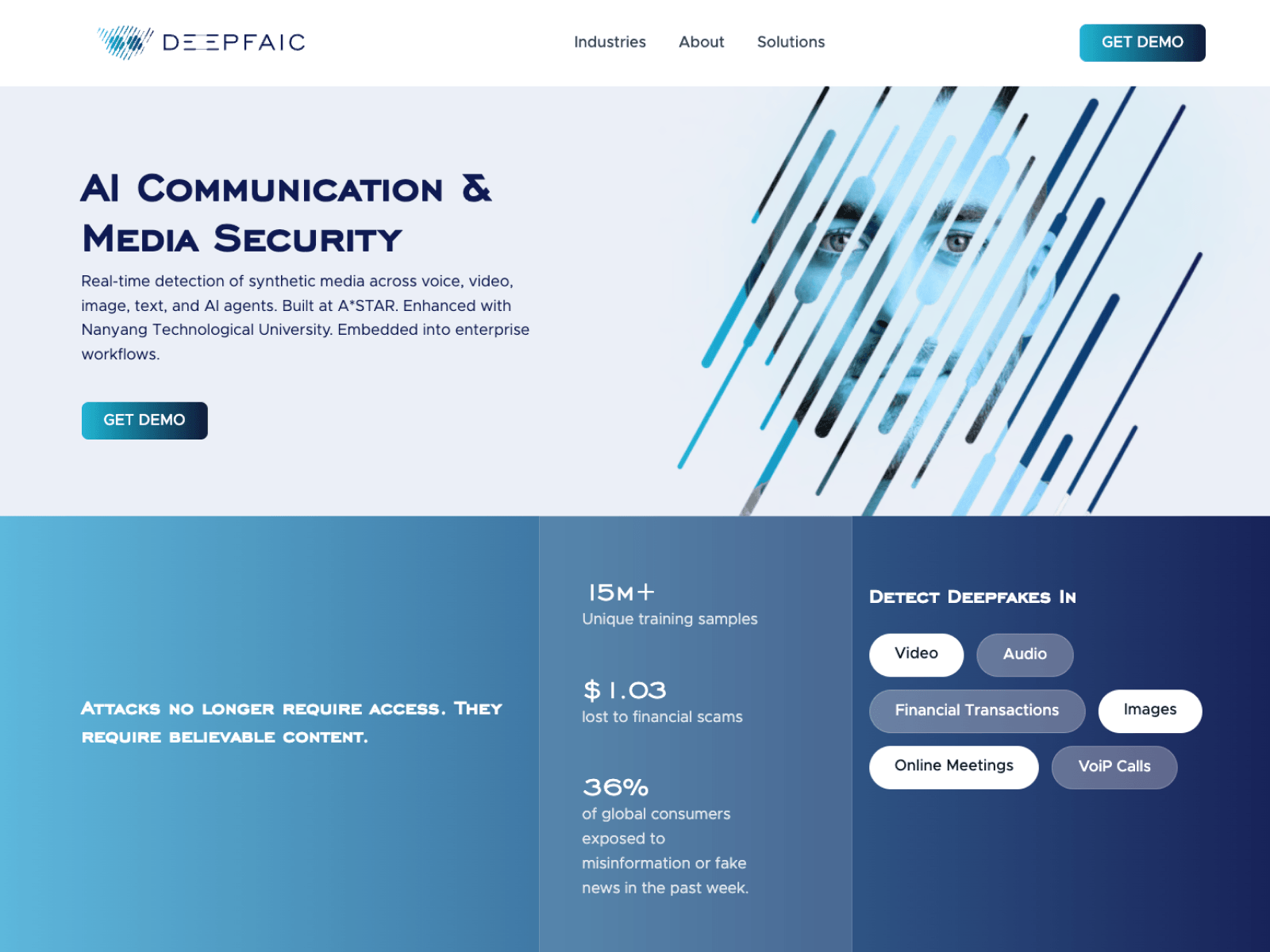
Design work for DeepFAIC, a deepfake detection platform providing real-time authenticity verification across voice, video, image, text and AI agents. The detection engine was developed at Singapore's A*STAR and enhanced with Nanyang Technological University, with the co-founder being the researcher who built the original models.
Role: design. Build delivered on Webflow by the client's team.
The category didn't exist yet — DeepFAIC is defining "AI Communication & Media Security" as a new layer in the enterprise security stack. So the design had to teach before it could sell, walking a CISO from an unfamiliar threat model to a specific product.
Key sections:
Hero establishing modality coverage and institutional pedigree in a single line
Threat framing with hard numbers: 15m+ training samples, $1.03 trillion lost to financial scams, 36% of consumers exposed to misinformation weekly
Rotating detection-surface list — video, audio, financial transactions, images, online meetings, VoIP
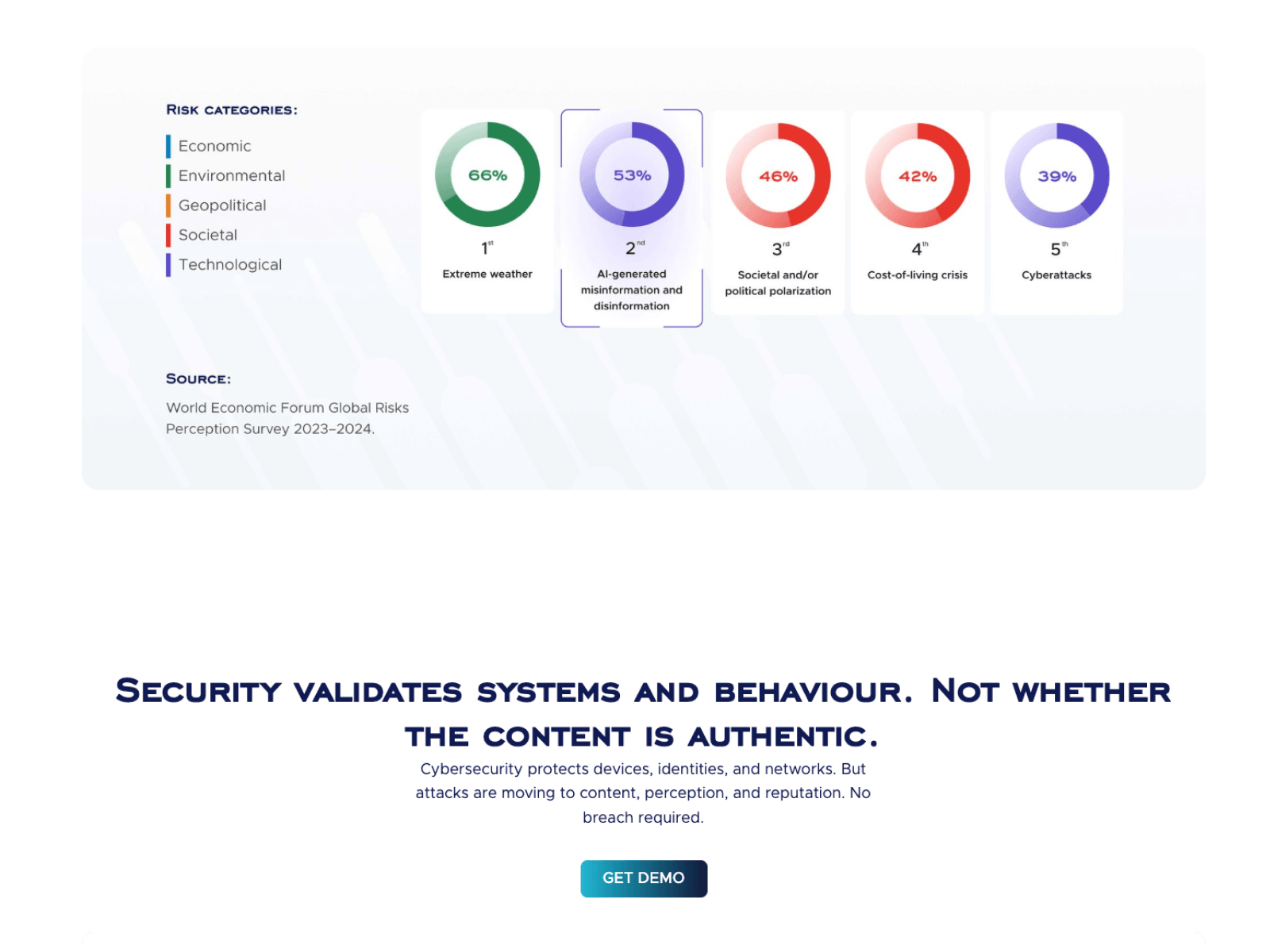
Category argument built across two diagram-led sections: security validates systems and behaviour, not whether content is authentic
Zero-trust parallel — access and devices are verified, content is still fully trusted
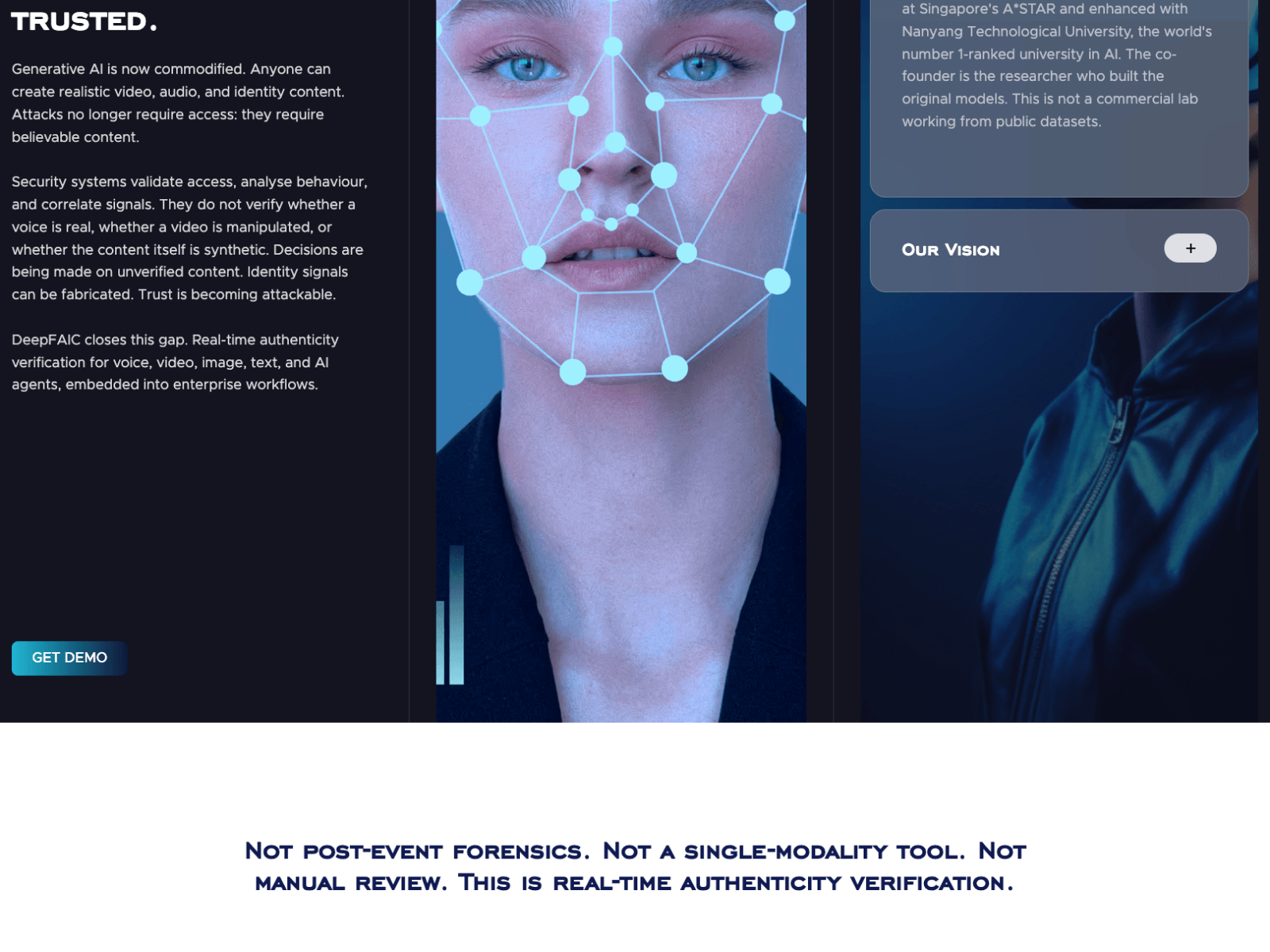
Mission, team and vision as an expandable accordion
Three use-case pillars: Trust Your Brand, Trust Your Candidates, Trust Your Meeting
Partner and institution logo marquee including A*STAR, Google, Teams, Armour Cybersecurity
Demo waitlist as the single conversion action
Design approach:
Concept-first structure — the threat model is taught before the product is pitched
Custom diagrams carrying the category argument visually
Statistic-anchored sections pairing each claim with a source figure
Enterprise restraint appropriate to a security buyer