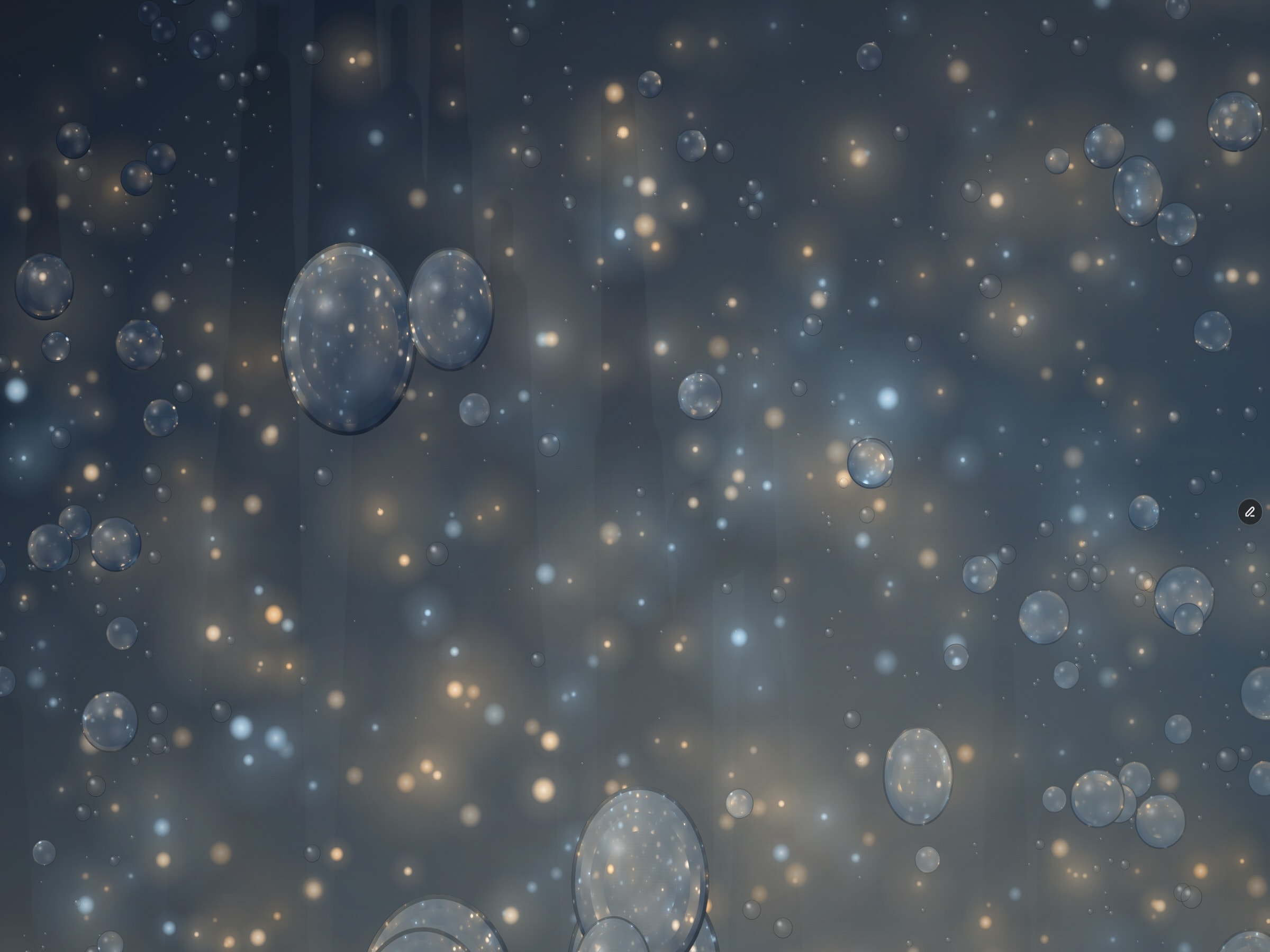
Rain on a window, with drops that genuinely refract. Each drop redraws whatever is behind it, sampling a wider region flipped on both axes - a spherical lens forming an inverted wide-angle image. Put a grid behind it and the lines inside a drop come out several times finer, broken at the boundary. A blur cannot do that.
The physics runs: condensation grows, crosses a weight threshold and starts running; a runner absorbs what it crosses, so volumes add and it accelerates; it stalls and starts again. Trails punch through the fog, which slowly re-condenses. The pointer wipes the glass too.
Drops are brighter than the glass around them, because a lens collects light over its aperture - without that they read as bubbles.
Drop your own photo behind the glass, or use one of the built-in backdrops. Canvas, nothing loaded from outside. Honours prefers-reduced-motion and freezes on the Framer canvas.

Rain on a window, with drops that genuinely refract. Each drop redraws whatever is behind it, sampling a wider region flipped on both axes - a spherical lens forming an inverted wide-angle image. Put a grid behind it and the lines inside a drop come out several times finer, broken at the boundary. A blur cannot do that.
The physics runs: condensation grows, crosses a weight threshold and starts running; a runner absorbs what it crosses, so volumes add and it accelerates; it stalls and starts again. Trails punch through the fog, which slowly re-condenses. The pointer wipes the glass too.
Drops are brighter than the glass around them, because a lens collects light over its aperture - without that they read as bubbles.
Drop your own photo behind the glass, or use one of the built-in backdrops. Canvas, nothing loaded from outside. Honours prefers-reduced-motion and freezes on the Framer canvas.