3 Framer SEO Tips
3 Framer SEO tips to help your site rank higher on Google and get recommended by LLMs like ChatGPT, Gemini, and Perplexity. Covers meta tags that actually earn clicks, smart backlink building, and content built around real search intent.
Framer SEO Tips to Rank on Google and Get Cited by LLMs
Three SEO tips to help your Framer site rank higher on Google and get picked up by LLMs like ChatGPT, Claude, Gemini, and Perplexity. These work for any niche — agencies, SaaS, local businesses, anything.
Tip 1: Fix your meta titles and descriptions
Meta titles and descriptions do two jobs: they help you rank (by signaling relevance to Google) and they drive click-through rate from the results page. Both matter.
For ranking, make sure your main keyword shows up naturally in both the title and description. If you're a plumber in Dallas, "Plumber Dallas" should be there — not stuffed, just present. Variations work too ("plumber" and "plumbing").
For clicks, keep your title between 50 and 70 characters. Anything past 70 gets cut off in the search results and is wasted space. Think about what would make someone actually click — urgency words like "24/7" or "emergency" can outperform generic copy when the searcher is in a hurry.
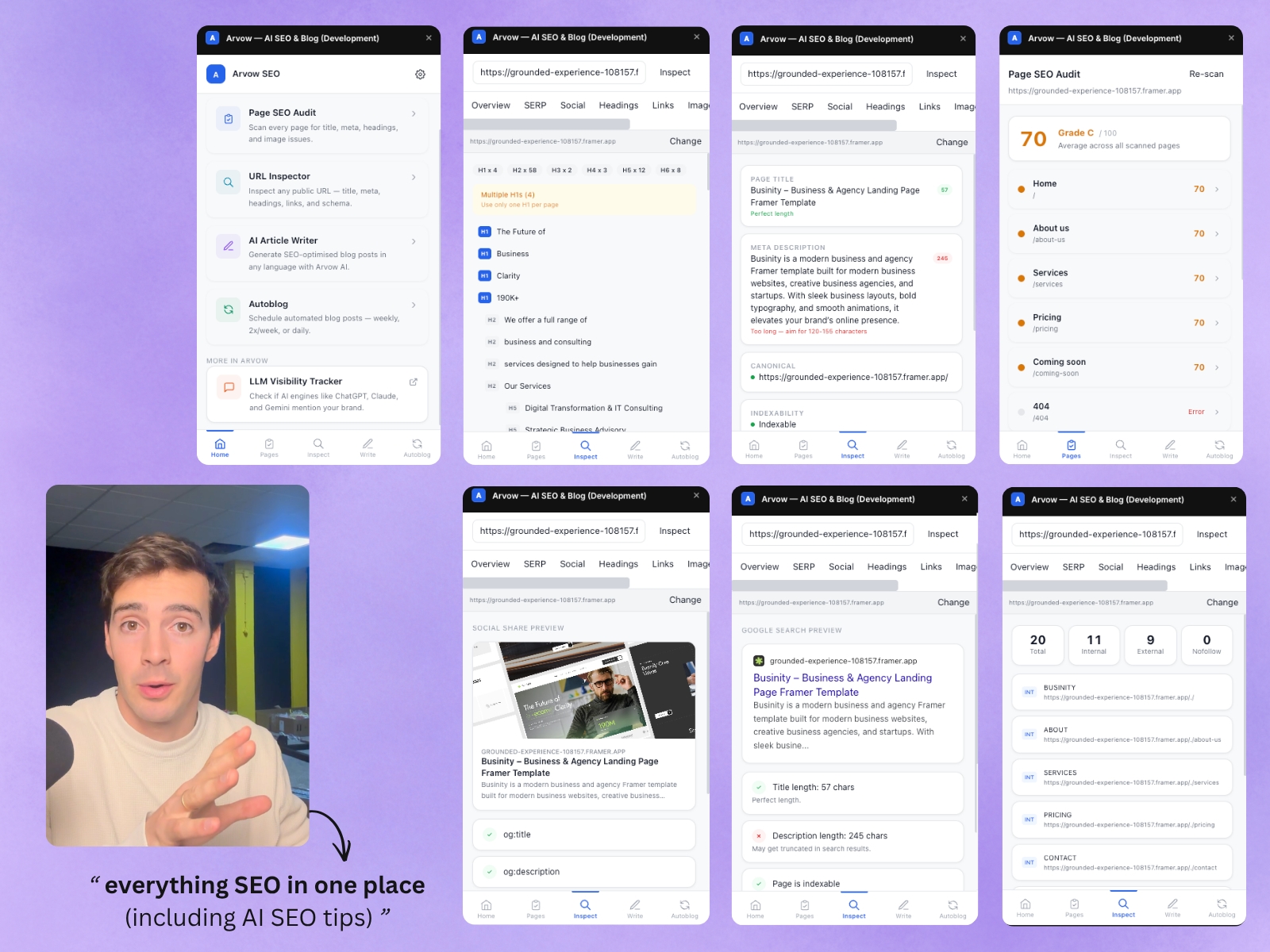
You can audit this quickly with a free SEO extension (linked below). It flags titles that are too short, too long, or missing keywords, and you can run it on competitor sites to see what they're doing.
Tip 2: Build backlinks the smart way
SEO has three pillars: on-page (what's on your site), off-page (backlinks), and technical (speed, schema, meta tags). Most people get backlinks wrong because they outreach randomly.
Better approach: pick the prompt you want your brand to show up for in LLMs — something like "best Framer plugin for SEO." Run it in ChatGPT or Claude, then look at which brands get mentioned and, more importantly, which sources those LLMs are citing.
Those citation sources are your backlink targets. If a DR 76 article is being cited for the exact prompt you want to rank for, getting your brand added to that article does two things at once: you get a quality backlink, and you land in a source the LLM already trusts for that query.
From there it's manual outreach. Find the contact page, email them, and ask what they charge to add your brand to the existing article — or to publish a new one that mentions you. Most will say yes.
Tip 3: Publish content that matches search intent
LLMs cite brands because those brands have content that answers the prompt. If you want to show up for "best Framer plugin for SEO," you need a page on your site built around that exact search intent.
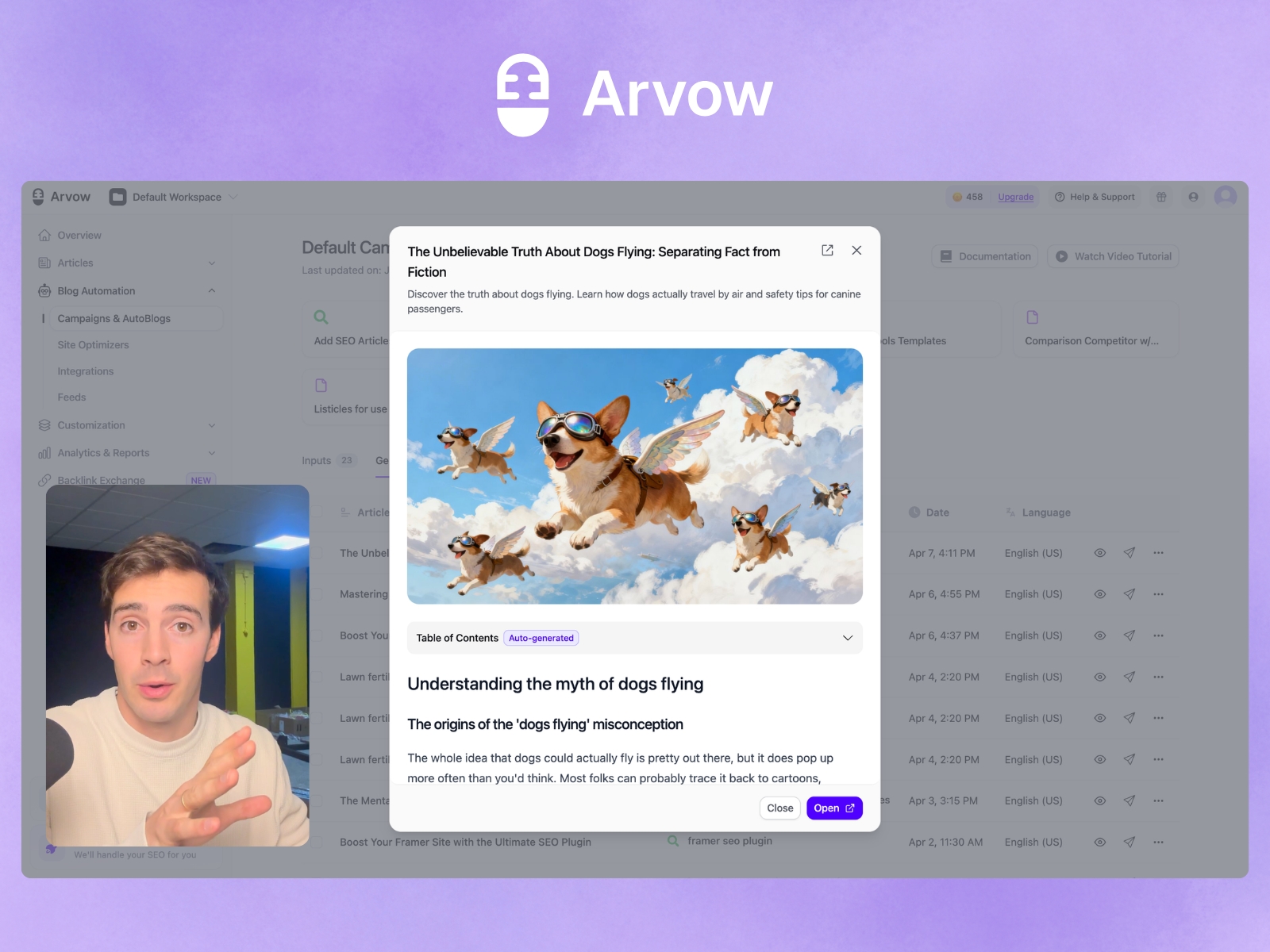
This is where consistent, well-structured content matters — articles with proper headings, internal and external links, images, and ideally embedded video. You can write these manually or use an AI blogging tool to automate the process (you can even set up daily or weekly auto-publishing straight to your Framer site via Zapier or Claude Code + MCP).
Whichever route you take, the point is the same: if the content doesn't exist, LLMs have nothing to cite.
Details
 Vasco Monteiro