

Justin
14:04
Trigger animations on scroll in Framer
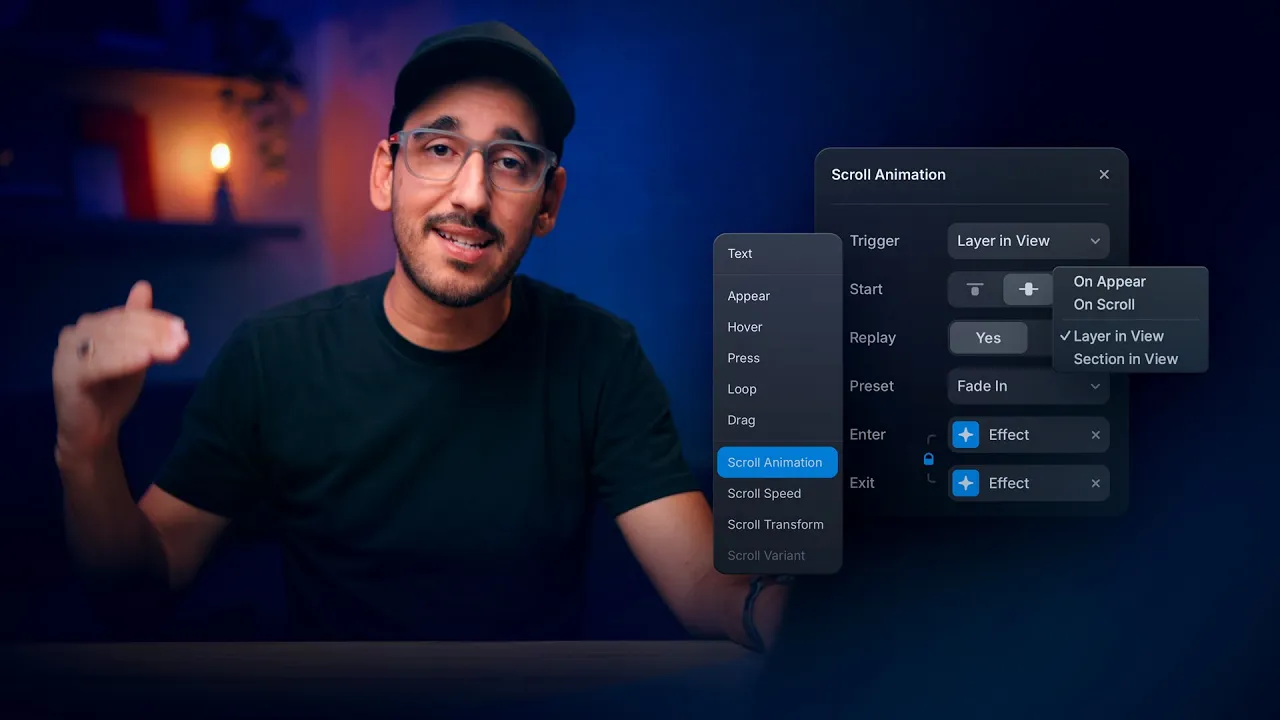
Learn how to trigger animations on scroll in Framer. The Appear Effect is perfect for adding animations above the fold, since they start automatically when the page loads. You will configure the relevant effect, trigger, and transition, then preview the interaction across breakpoints.
Lesson details
Select the layer, add a scroll-triggered effect, and choose the viewport point that starts the animation. Define the initial and final values, then set duration, delay, and easing for the entrance.
Trigger the motion close enough to the viewport that visitors understand what changed. Preview slow and fast scrolling, repeated navigation, and reduced motion so essential content never depends on the animation completing.
Build the static composition first, then add movement. This keeps copy, controls, and responsive layout usable when reduced motion is enabled or the effect has not loaded yet.
Frequently asked questions
How do I trigger animations on scroll in Framer?
Learn how to trigger animations on scroll in Framer. The Appear Effect is perfect for adding animations above the fold, since they start automatically when the page loads. You will configure the relevant effect, trigger, and transition, then preview the interaction across breakpoints.
What does this lesson cover?
The lesson covers the settings and steps used to trigger animations on scroll in Framer. See Scroll-Triggered Animation. Follow the demonstrated order in your project and review each change on the canvas before moving to the next step.
Which animation settings should I test in Framer?
Test the trigger, start and end states, timing, easing, and replay behavior used in the lesson. Preview the interaction at different viewport sizes and confirm that it supports the page hierarchy. Reduce or remove motion that distracts from content or makes controls harder to use.
Can I use this animation on a responsive site in Framer?
Yes. Preview the effect at every affected breakpoint and resize between them. Check trigger positions, clipping, motion distance, and the start and end states at narrow widths. Adjust the layout or effect when the animation obscures content or moves an interactive element away from its expected position.
What should I review after I trigger animations on scroll in Framer?
Review the exact pages and elements changed by the workflow. Confirm that copy, links, accessibility, responsive behavior, and interaction states still work as intended. Use preview for the final check and keep publishing separate from editing so you can fix problems before visitors see the update.