Updates
What’s new
Published
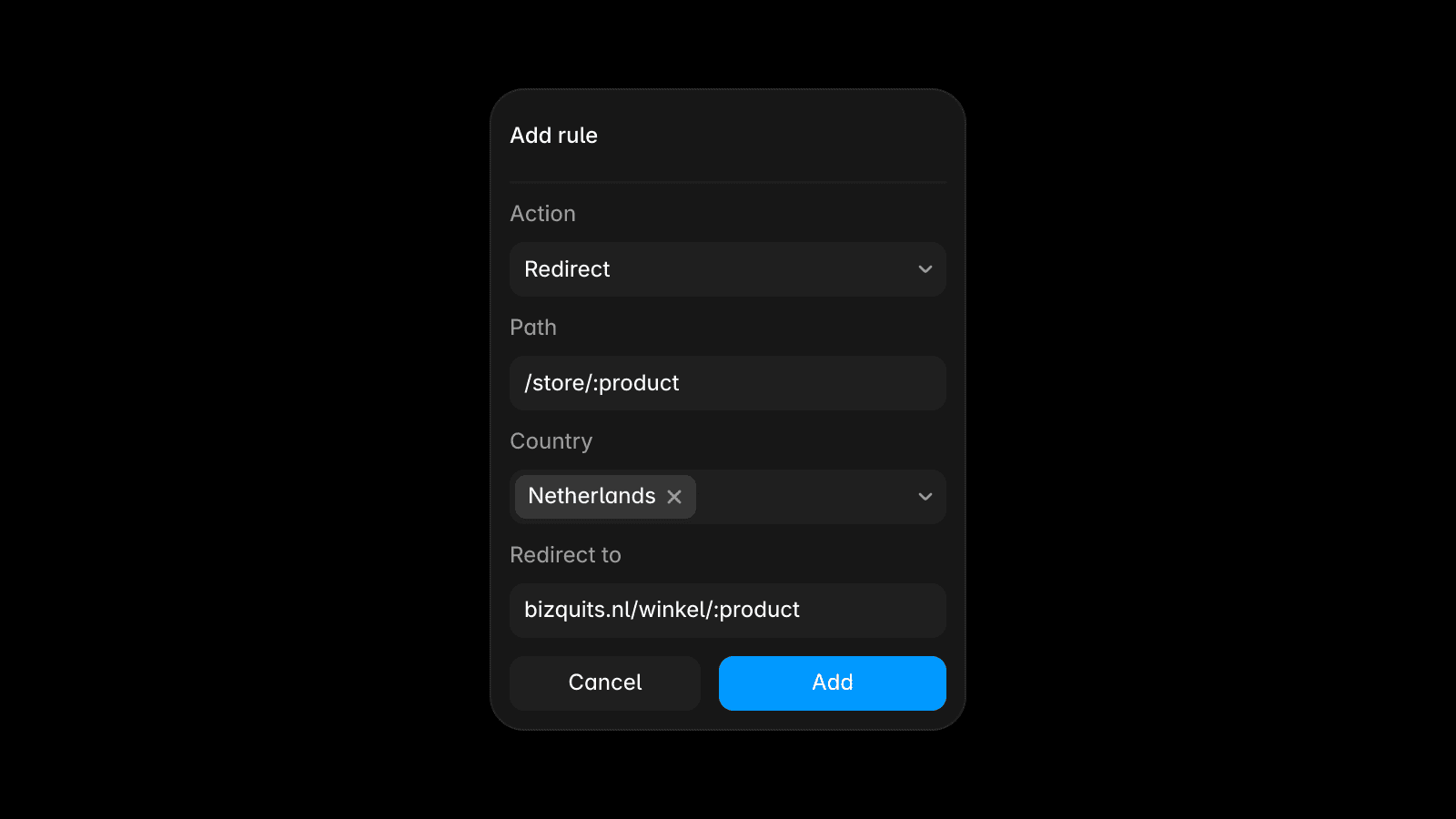
Adding new CMS items is now faster. A new empty row appears at the bottom of every collection, allowing you to create items directly from the table. To quickly add an item, focus the empty row, fill in one or more fields and hit Return to quickly add it and move to the next one. It’s especially useful for rapid creation of simple entries like categories, labels or tags. We’ve also shipped a number of additions, improvements, and fixes, with a particular focus on the Agent experience in the CMS. Additionally, we made formatted text fields behave more reliably. See the full list below.
Added
Added a bottom empty row to quickly create new items
Added Agent support for adding CMS rows as context
Added Agent support for working with field dividers
Added Agent support for collections via Select tool
Added Agent support for previous and next pages
Added support to delete multiple items with
⌫Added tooltips to the formatted text toolbar
Added ability to force delete fields in use
Added support for searching collections
Added support for filtering by date field
Improved
Improved Agent single-cell selection and editing
Improved Agent duplicating synced collections
Improved Agent awareness of selected rows
Improved Agent awareness of draft statuses
Improved Agent highlighting status changes
Improved Agent handling of required slugs
Improved Agent selected row highlights
Improved Agent Select tool behaviour
Improved selection of links in rich text
Improved contrast in the item overlay
Improved the
/menu in rich textImproved the menu to filter items
Fixed
Fixed inline editing of formatted text with components
Fixed an issue with CSV exports and
<video>tagsFixed undo when pasting images in formatted text
Fixed a font issue when inline editing code blocks
Fixed undo after adding a link in formatted text
Fixed scrolling when reselecting cell groups
Fixed an issue with scrollbars in embeds
Fixed the Fields header not being sticky
Fixed
Add to Agentbutton behaviour
Published

OpenAI’s next generation of models is now available in Framer: GPT 5.6 Sol, GPT 5.6 Terra, and GPT 5.6 Luna. Together, they give you more control over how you spend credits, whether you need the highest-quality creative output, balanced intelligence at lower cost, or maximum speed for large updates. GPT 5.6 Sol is our strongest creative model yet. In testing, it produced refined designs with minimal guidance and became the first model to score 100% on our hardest internal benchmark, a major step up from GPT 5.5 at the same credit cost. GPT 5.6 Terra is built for balance. It delivers GPT 5.5-level results while using only 0.6× the credits, making it ideal for large audits, redesigns, and consistency passes. GPT 5.6 Luna is our fastest model in Framer, running 2× faster than any previous option while using only 0.4× the credits compared to GPT 5.5. It is especially well suited for large CMS updates and complex cross-site find-and-replace tasks.
Published

Fable 5 is now available in Framer. It’s the most proactive model we’ve tested. It goes beyond the brief, setting up styles and reusing elements across your site. When designing from scratch, first results are polished, with thoughtful finishing touches. It handles creative work like shaders and subtle animations noticeably better than models like Opus or Sonnet. In our latest evals, Fable 5 scored 83% overall, clearing Opus 4.8 at 77%, and led every model on design at 81%. At 2× the credit usage of GPT 5.5, Fable lands around 3.3× Sonnet 5. Now live in the agent model picker.
Published

Sonnet 5 is now available in Framer. Our early use shows it’s a stronger partner for original design work than Sonnet 4.6, especially around layout, visual direction, and editing alongside you. It asks sharper design questions, uses images more purposefully when the prompt calls for it, and is better at picking fonts and writing in a more considered way. Expect a little more upfront thinking than 4.6, but strong efficiency in practice: in our Framer evals, Sonnet 5 scored higher overall while costing less than Sonnet 4.6, with accuracy improving from 72% to 90%. It uses 0.6× the credits of GPT 5.5, with introductory pricing offering 33% off through August 31.